

4
Introduction
Understanding formal and informal writing is essential for effective communication. The way you write changes based on who you are writing to and why you are writing. Using the wrong style can create confusion or leave a poor impression.
This guide explains formal and informal writing in simple terms with clear examples, so you can confidently choose the right style every time.
What Is Formal Writing?
Formal writing is used for official, professional, or academic purposes. It follows strict rules of grammar, structure, and tone.
Where Formal Writing Is Used
- Job applications
- Official letters and emails
- Business communication
- Academic writing
- Government or legal documents
Features of Formal Writing
- Polite and professional tone
- Complete sentences
- No slang or short forms
- Clear structure
- Objective language
Example of Formal Writing
I am writing to inform you about the scheduled meeting on Monday. Kindly confirm your availability.
What Is Informal Writing?
Informal writing is used for personal communication. It is relaxed, friendly, and conversational.
Where Informal Writing Is Used
- Letters to friends or family
- Personal emails and messages
- Social media posts
- Notes and casual communication
Features of Informal Writing
- Friendly tone
- Simple language
- Use of contractions (I’m, don’t)
- Personal expressions
- Flexible structure
Example of Informal Writing
Just wanted to let you know about the meeting on Monday. Let me know if you’re free!
Difference Between Formal and Informal Writing
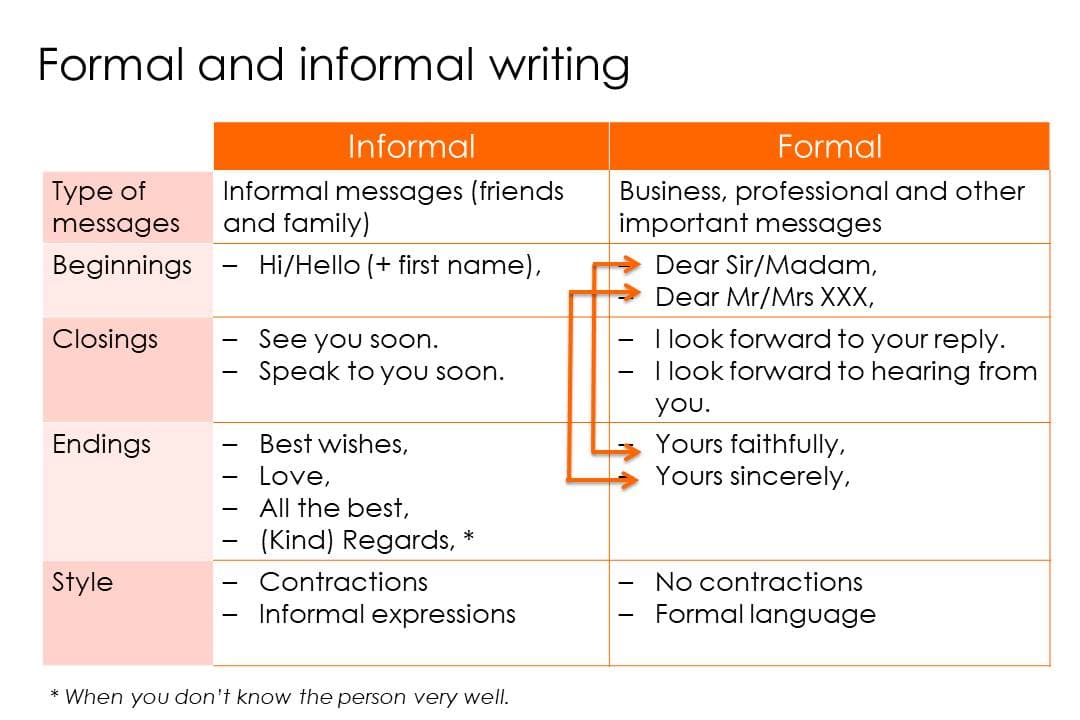
| Formal Writing | Informal Writing |
|---|---|
| Used in official situations | Used in personal situations |
| Professional tone | Friendly tone |
| No slang or contractions | Slang and short forms allowed |
| Fixed structure | Flexible structure |
| Objective language | Emotional and personal language |
When to Use Formal and Informal Writing
Choosing between formal and informal writing depends on:
- Relationship with the reader
- Purpose of writing
- Platform (email, letter, message)
Use formal writing when in doubt—especially in professional situations.
Common Mistakes to Avoid
- Using informal language in official emails
- Mixing formal and informal tones
- Using slang in academic writing
- Writing too casually in job applications
Being mindful of tone improves communication effectiveness.
Examples: Same Message, Two Styles
Formal Version
I would like to request leave for one day due to personal reasons.
Informal Version
I need a day off tomorrow for personal work.
Why Understanding Formal and Informal Writing Matters
Knowing the difference helps you:
- Communicate clearly
- Make a good impression
- Avoid misunderstandings
- Write confidently in exams, jobs, and daily life
From Writing to Sending Letters
Sometimes, formal writing needs to be sent as a physical letter, especially for offices or institutions.
With PostPatra, you can write formal or informal letters online and send them as real physical letters anywhere in India, without visiting a post office.
👉 https://postpatra.com
FAQs: Formal and Informal Writing
Can informal writing be used in emails?
Yes, for friends or close colleagues—but not for official communication.
Is formal writing difficult?
No. Simple, clear sentences work best.
Can students use informal writing in exams?
Only if the question asks for it. Otherwise, formal writing is expected.
Can one letter contain both styles?
No. Always stick to one style.
Conclusion
Understanding formal and informal writing helps you communicate the right way in the right situation. Formal writing shows professionalism and respect, while informal writing builds warmth and connection.
Master both styles—and you’ll always know how to express yourself clearly and confidently.
Leave a Reply