
4
Introduction
Writing a professional resignation letter is an important step when leaving a job. No matter the reason for your resignation, the way you exit an organization can affect your professional reputation, references, and future opportunities.
A well-written resignation letter shows maturity, respect, and professionalism. This guide explains how to write a professional resignation letter, provides ready-to-use examples, and shares tips to help you resign gracefully.
What Is a Professional Resignation Letter?
A professional resignation letter is a formal written notice informing your employer of your decision to leave your current position. It typically includes:
- Your intention to resign
- Your last working day
- Gratitude for the opportunity
- A polite and respectful tone
This letter becomes part of your official employment record.
Why a Professional Resignation Letter Matters
Submitting a proper resignation letter helps you:
- Maintain a positive relationship with your employer
- Secure good references in the future
- Demonstrate professionalism and integrity
- Avoid misunderstandings about notice periods
Even if you are unhappy in your role, professionalism should always be maintained.
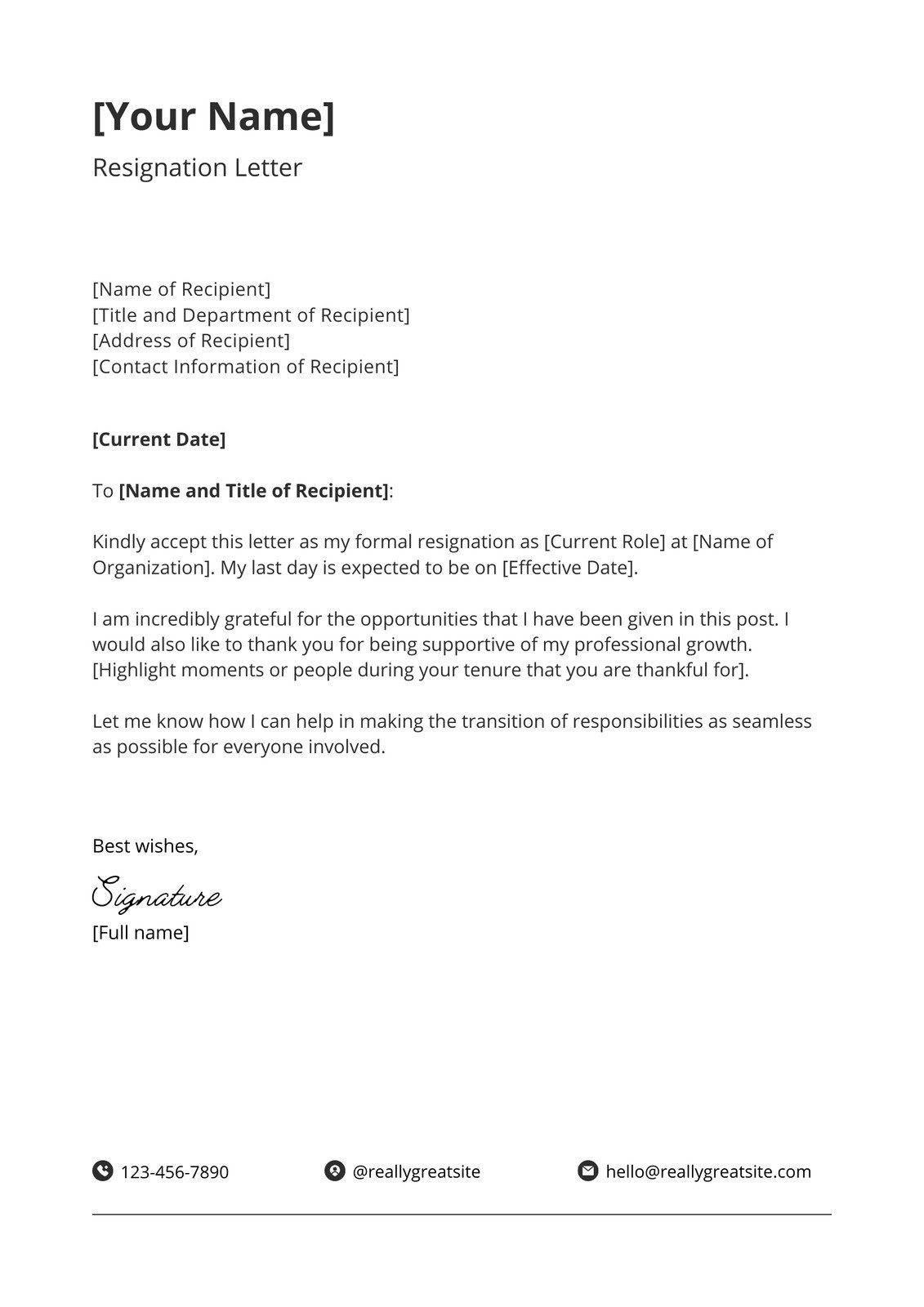
Professional Resignation Letter Format (Standard)
A standard professional resignation letter includes:
- Your name and contact details
- Date
- Manager’s name and designation
- Company name
- Subject line
- Statement of resignation
- Notice period and last working day
- Expression of gratitude
- Closing and signature
Keep the letter short and clear—usually one page.
How to Write a Professional Resignation Letter
1. Start with a Clear Statement
Clearly state that you are resigning.
Example:
“I am writing to formally resign from my position as Marketing Executive.”
2. Mention Your Last Working Day
Follow your notice period as per company policy.
Example:
“My last working day will be 30 June 2025.”
3. Express Gratitude
Thank your employer for the opportunity and experience.
Example:
“I appreciate the support and opportunities provided during my time here.”
4. Keep the Tone Positive
Avoid complaints, criticism, or emotional language.
5. Close Professionally
End with a polite closing and offer support during transition.
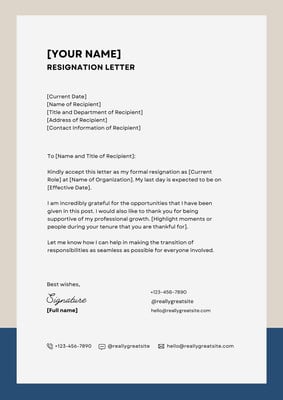
Professional Resignation Letter Example (General)
Dear [Manager’s Name],
I am writing to formally resign from my position as [Job Title] at [Company Name]. Please accept this letter as notice of my resignation, effective [last working day].
I would like to thank you and the team for the opportunities and support provided during my tenure. My experience here has been valuable and has contributed significantly to my professional growth.
I will ensure a smooth handover of my responsibilities during the notice period.
Sincerely,
[Your Name]
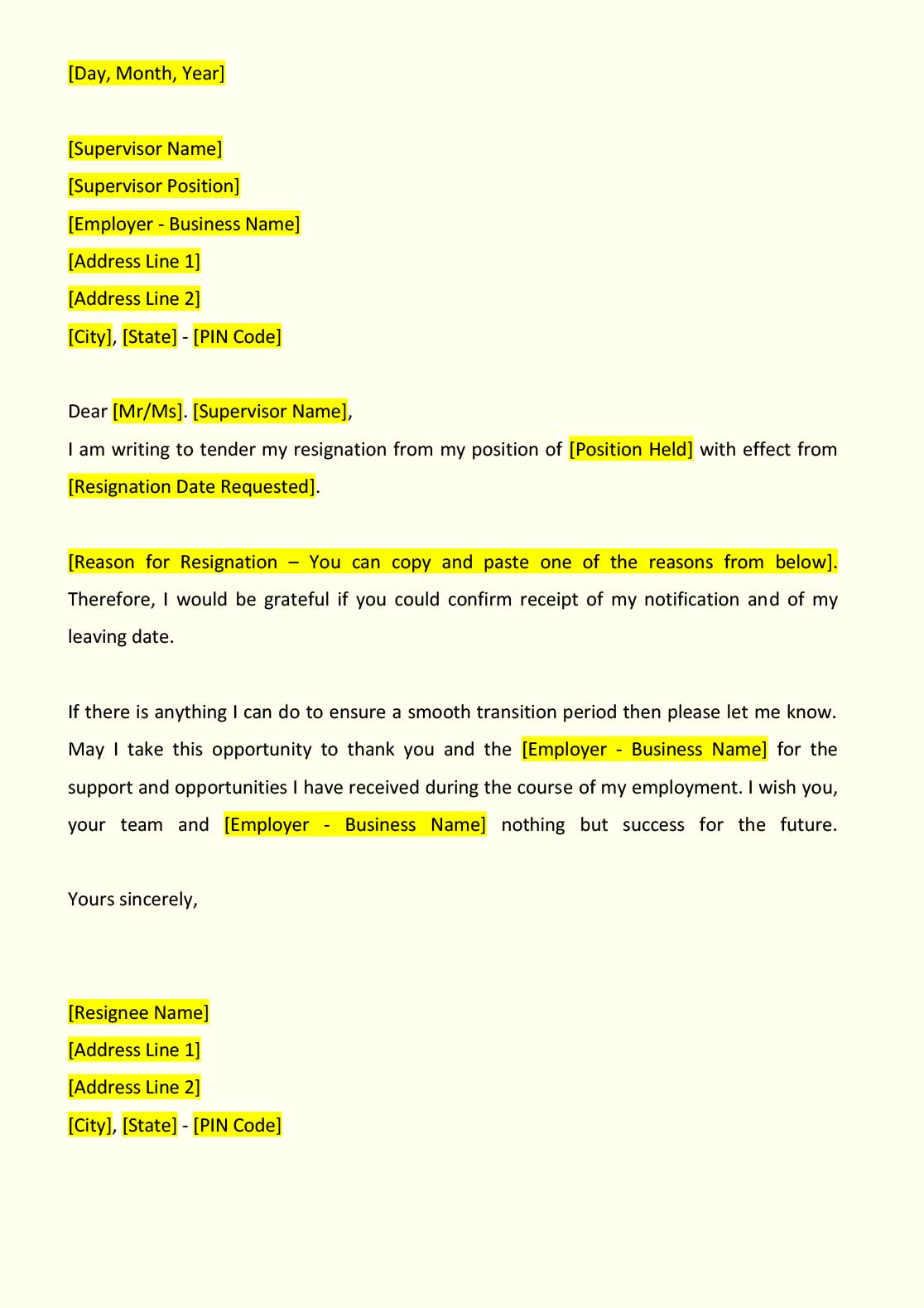
Short Professional Resignation Letter
Dear [Manager’s Name],
Please accept this letter as formal notice of my resignation from my position as [Job Title]. My last working day will be [date].
Thank you for the opportunity to work with the organization.
Sincerely,
[Your Name]
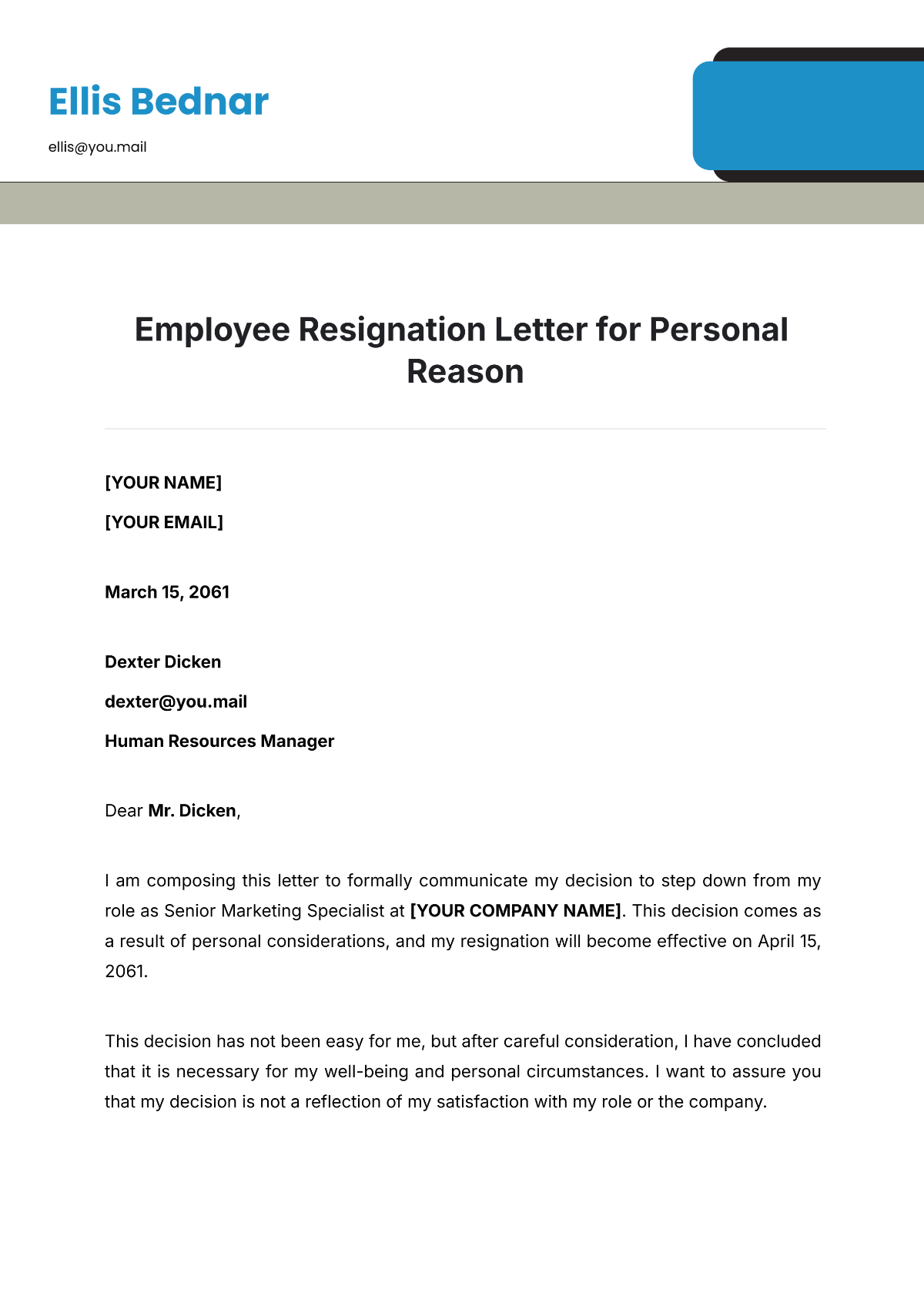
Professional Resignation Letter for Personal Reasons
Dear [Manager’s Name],
I am writing to formally resign from my position as [Job Title], effective [last working day], due to personal reasons.
I am grateful for the opportunities and support I received during my time at [Company Name]. I will assist in ensuring a smooth transition.
Sincerely,
[Your Name]
Tips for Writing a Professional Resignation Letter
- Keep it polite and concise
- Follow company notice period rules
- Avoid negative comments
- Use professional language
- Proofread before sending
Your resignation letter should leave a positive final impression.
Common Mistakes to Avoid
- Writing an emotional or angry letter
- Giving too much personal detail
- Not mentioning your last working day
- Using informal language
- Resigning verbally without written notice
Email vs Physical Resignation Letter

4
Many companies accept resignation letters by email. However, a physical resignation letter is still preferred or required in:
- Government or PSU jobs
- Traditional organizations
- Senior or managerial roles
- Formal HR documentation
With PostPatra, you can:
- Write your professional resignation letter online
- Format it cleanly and professionally
- Print and deliver it anywhere in India
- Avoid visiting the post office
- Track delivery easily
This ensures your resignation is formally recorded.
FAQs
1. Is a professional resignation letter mandatory?
Yes. Most organizations require written resignation.
2. How long should a resignation letter be?
Short and clear—usually one page.
3. Should I mention the reason for resignation?
Optional. Keep it brief and professional if included.
4. Can I resign via email only?
It depends on company policy, but written notice is always recommended.
5. Can I send a resignation letter by post?
Yes. Physical letters are often required for official records.
Conclusion
A professional resignation letter helps you leave your job with dignity, respect, and professionalism. It reflects your character and preserves relationships that may matter later in your career.
Whether you submit it by email or as a formally delivered physical letter through PostPatra, clarity and courtesy should always come first.
How you leave a job is just as important as how you start one.
Leave a Reply