4
Introduction
A formal resignation letter is an essential document when you decide to leave a job. It officially informs your employer of your decision, confirms your last working day, and reflects your professionalism—regardless of your reason for leaving.
Handled correctly, a formal resignation letter helps preserve relationships, supports smooth transitions, and safeguards your professional reputation.
What Is a Formal Resignation Letter?
A formal resignation letter is a written notice submitted to your employer stating:
- Your intention to resign
- Your notice period and last working day
- Appreciation for the opportunity
- Willingness to support the transition
It becomes part of your official employment record.
Why a Formal Resignation Letter Matters
Submitting a formal resignation letter helps you:
- Maintain professionalism and goodwill
- Avoid misunderstandings about notice periods
- Secure positive references
- Comply with HR and legal requirements
Even if you are leaving due to challenges, professionalism should always be maintained.
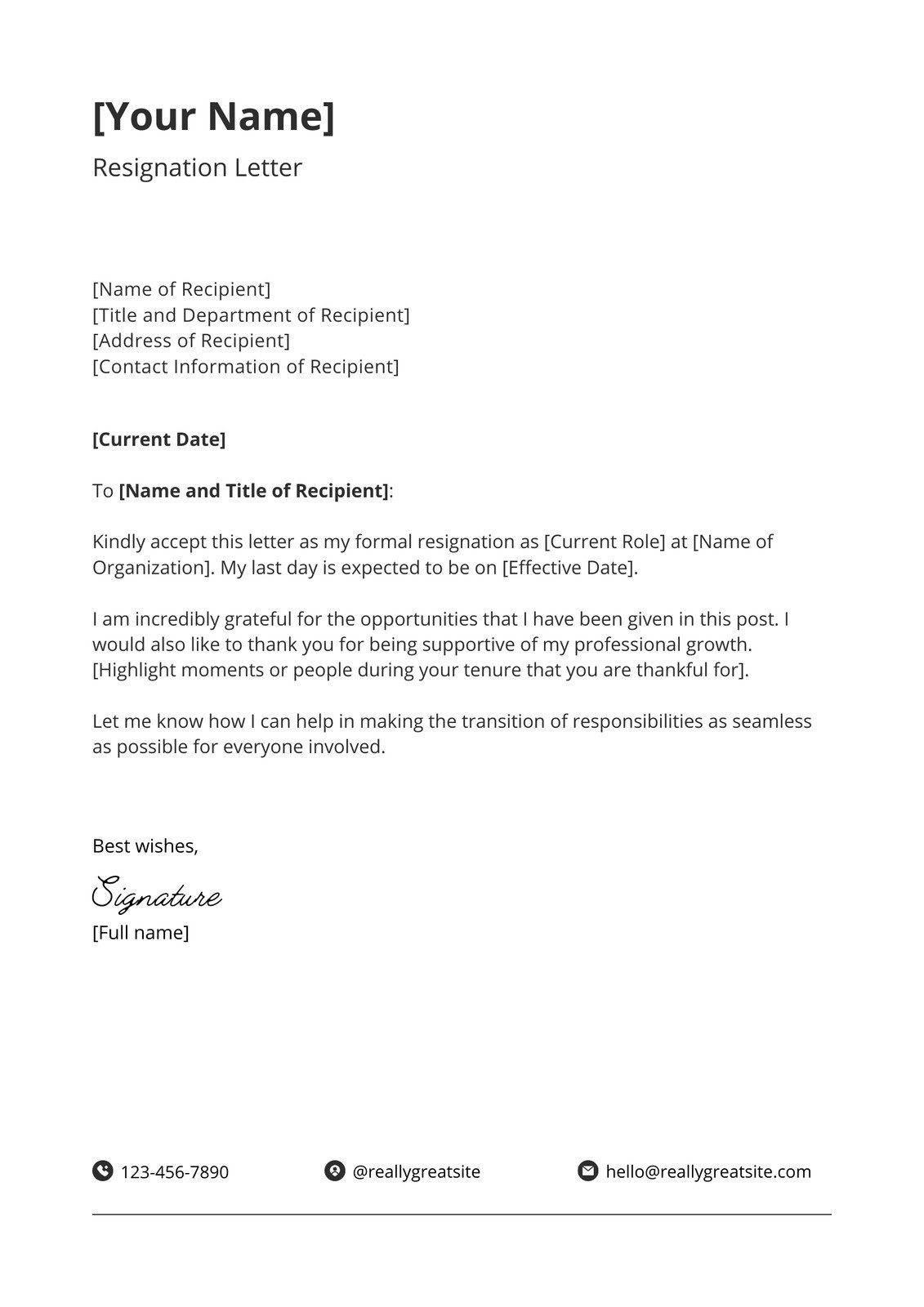
Formal Resignation Letter Format (Standard)
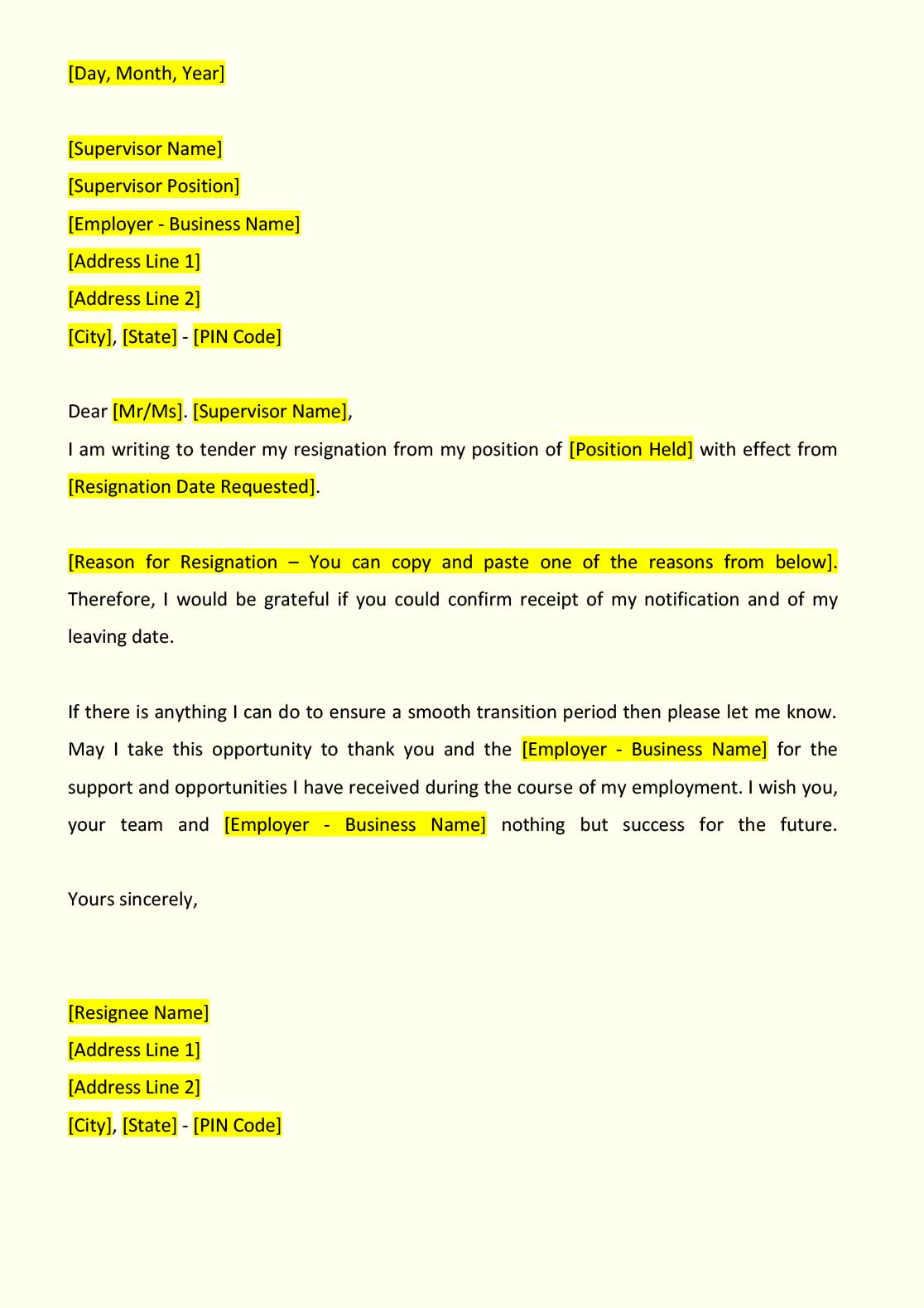
A clear and professional format includes:
- Your name and contact details
- Date
- Manager’s name and designation
- Company name
- Subject line
- Statement of resignation
- Last working day (as per notice period)
- Expression of gratitude
- Offer to assist with transition
- Closing and signature
Keep the letter short, polite, and factual—usually one page.
How to Write a Formal Resignation Letter (Step-by-Step)
1. State Your Resignation Clearly
Begin with a direct statement.
Example:
“I am writing to formally resign from my position as Senior Analyst at ABC Company.”
2. Mention Your Last Working Day
Align with your contractual notice period.
Example:
“My last working day will be 31 March 2025.”
3. Express Appreciation
Thank your employer for the opportunity and experience.
Example:
“I appreciate the support and opportunities provided during my tenure.”
4. Offer Transition Support
Show cooperation and responsibility.
Example:
“I will ensure a smooth handover of my responsibilities.”
5. Close Professionally
Use a respectful sign-off.
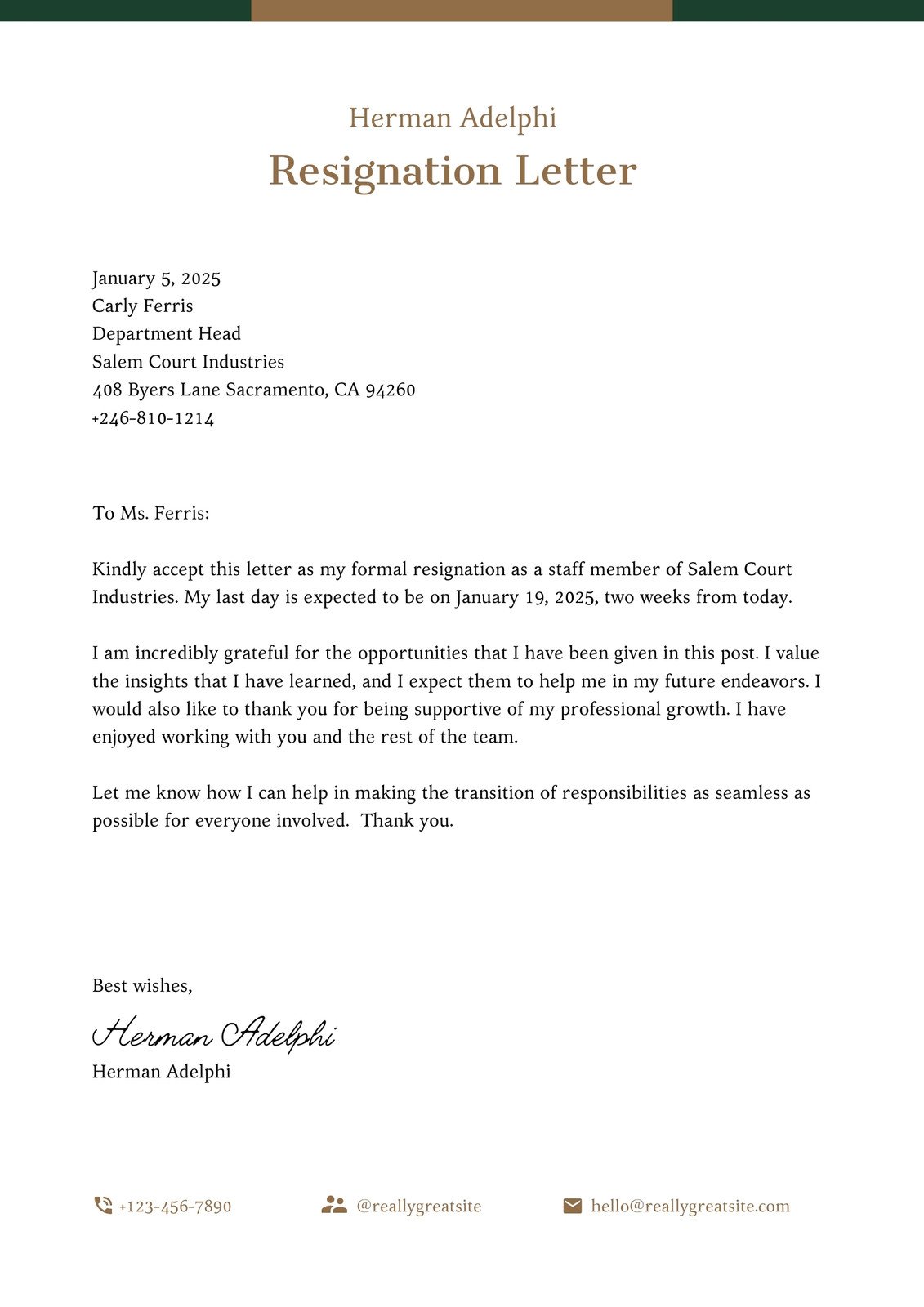
Formal Resignation Letter Example (General)
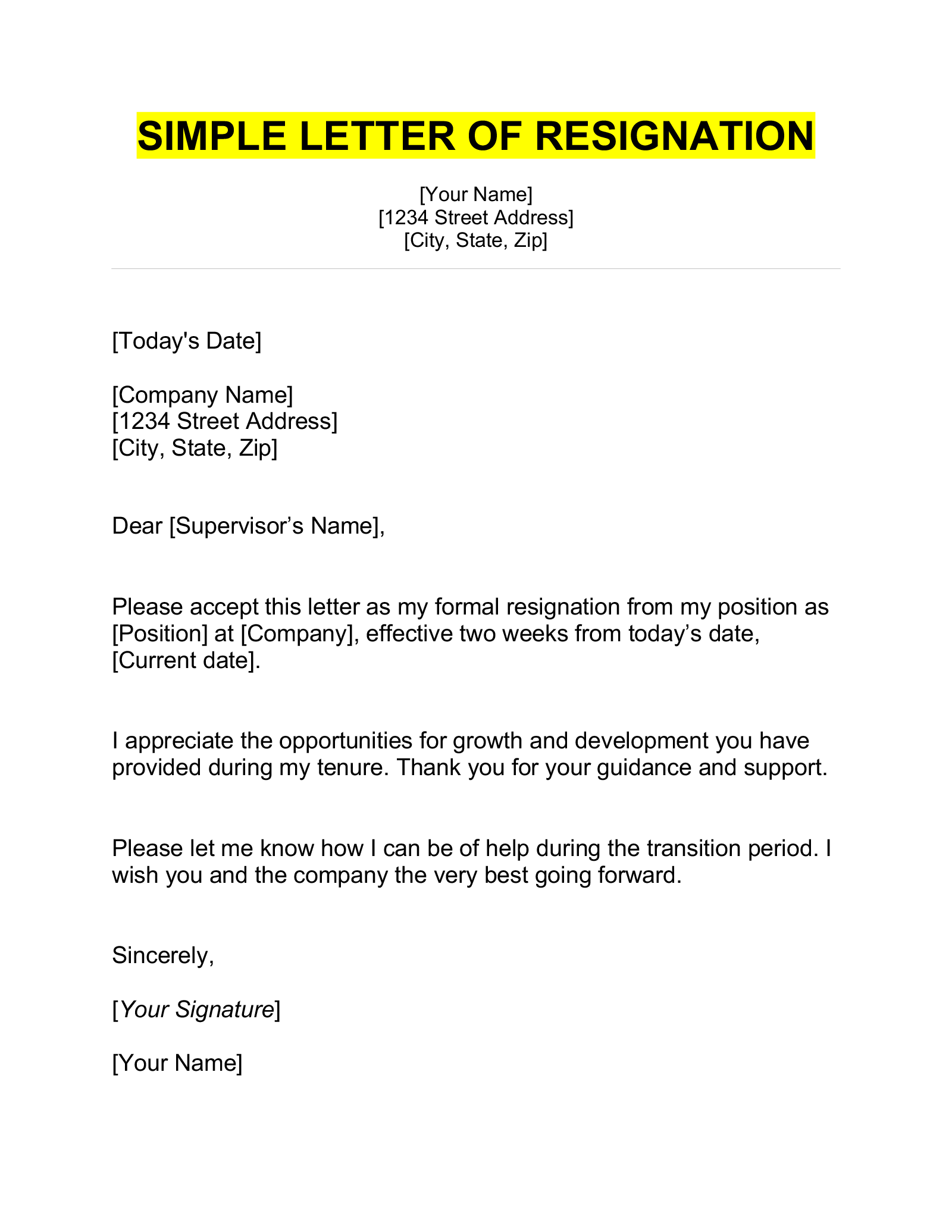
Dear [Manager’s Name],
I am writing to formally resign from my position as [Job Title] at [Company Name]. Please accept this letter as notice of my resignation, effective [last working day].
I would like to thank you and the team for the guidance and opportunities provided during my time at the company. My experience here has been valuable for my professional growth.
I will do my best to ensure a smooth transition of responsibilities during the notice period.
Sincerely,
[Your Name]
Short Formal Resignation Letter
Dear [Manager’s Name],
Please accept this letter as formal notice of my resignation from my role as [Job Title]. My last working day will be [date].
Thank you for the opportunity to work with the organization.
Sincerely,
[Your Name]
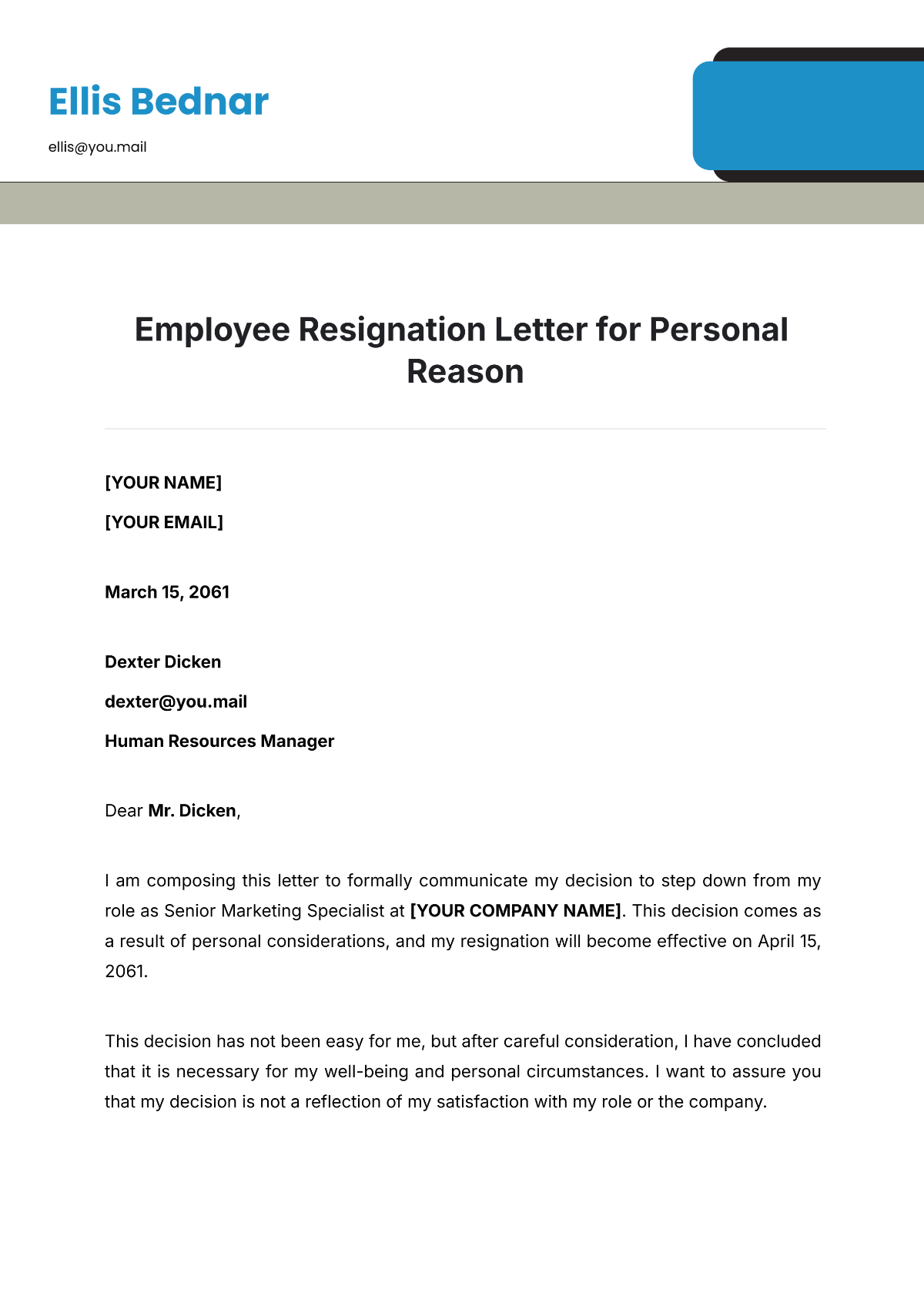
Formal Resignation Letter for Personal Reasons
Dear [Manager’s Name],
I am writing to formally resign from my position as [Job Title], effective [last working day], due to personal reasons.
I am grateful for the opportunities and support provided during my tenure and will assist in ensuring a smooth transition.
Sincerely,
[Your Name]
Tips for Writing a Formal Resignation Letter
- Keep the tone polite and professional
- Follow company notice period rules
- Avoid criticism or emotional language
- Be concise and clear
- Proofread before submission
A respectful exit often matters as much as a strong start.
Common Mistakes to Avoid
- Writing an emotional or negative letter
- Providing excessive personal details
- Omitting your last working day
- Using informal language
- Resigning verbally without written notice
Email vs Physical Formal Resignation Letter
4
Many organizations accept resignation by email. However, a physical formal resignation letter is still preferred or required in:
- Government or PSU roles
- Traditional organizations
- Senior or managerial positions
- Formal HR documentation
With PostPatra, you can:
- Write your formal resignation letter online
- Format it professionally
- Print and deliver it anywhere in India
- Avoid visiting the post office
- Track delivery easily
This ensures your resignation is formally recorded and delivered reliably.
FAQs
1. Is a formal resignation letter mandatory?
Yes, most organizations require written notice.
2. How long should a formal resignation letter be?
Short and clear—ideally one page.
3. Should I mention the reason for resignation?
Optional. Keep it brief and professional if included.
4. Can I resign only via email?
It depends on company policy; written notice is always recommended.
5. Can I send a formal resignation letter by post?
Yes, especially for official records.
Conclusion
A formal resignation letter reflects your professionalism and respect for the organization you are leaving. Written clearly and courteously, it helps ensure a smooth transition and preserves relationships that may matter in the future.
Whether submitted by email or delivered as a professionally printed letter through PostPatra, clarity, courtesy, and compliance should guide your approach.
How you leave a role often defines how you are remembered.
Leave a Reply