
4
Introduction
A motivation letter for PhD is one of the most critical documents in your doctoral application. It explains why you want to pursue a PhD, why this field and university, and why you are a suitable candidate.
Unlike a resume or transcript, this letter reflects your research mindset, academic maturity, and long-term vision—factors that strongly influence selection committees.
What Is a Motivation Letter for PhD?
A motivation letter for PhD (also called a Statement of Purpose in some universities) is a formal academic letter submitted with your PhD application.
It highlights:
- Your academic background
- Research interests
- Motivation for pursuing a PhD
- Why you chose the specific university/supervisor
- Your long-term academic or research goals
It focuses on intellectual motivation, not just achievements.
Why Is the Motivation Letter So Important for PhD?
For PhD admissions, universities look for:
- Research curiosity
- Clarity of goals
- Ability to work independently
- Alignment with faculty research
A strong motivation letter can outweigh average grades if your research intent is clear and convincing.
Ideal Structure of a Motivation Letter for PhD
4
Follow this proven structure:
1. Introduction (Purpose & Interest)
- State your intention to apply for the PhD program
- Mention your research area clearly
2. Academic Background
- Briefly describe your education
- Highlight relevant coursework, thesis, or projects
3. Research Interests & Experience
- Explain your research interests
- Mention prior research work, publications, or methodology exposure
4. Why This University / Department
- Show alignment with the department’s research focus
- Mention facilities, labs, or research environment
5. Career Goals
- Explain how the PhD fits into your long-term academic or research plans
6. Conclusion
- Reaffirm motivation
- Express readiness and commitment
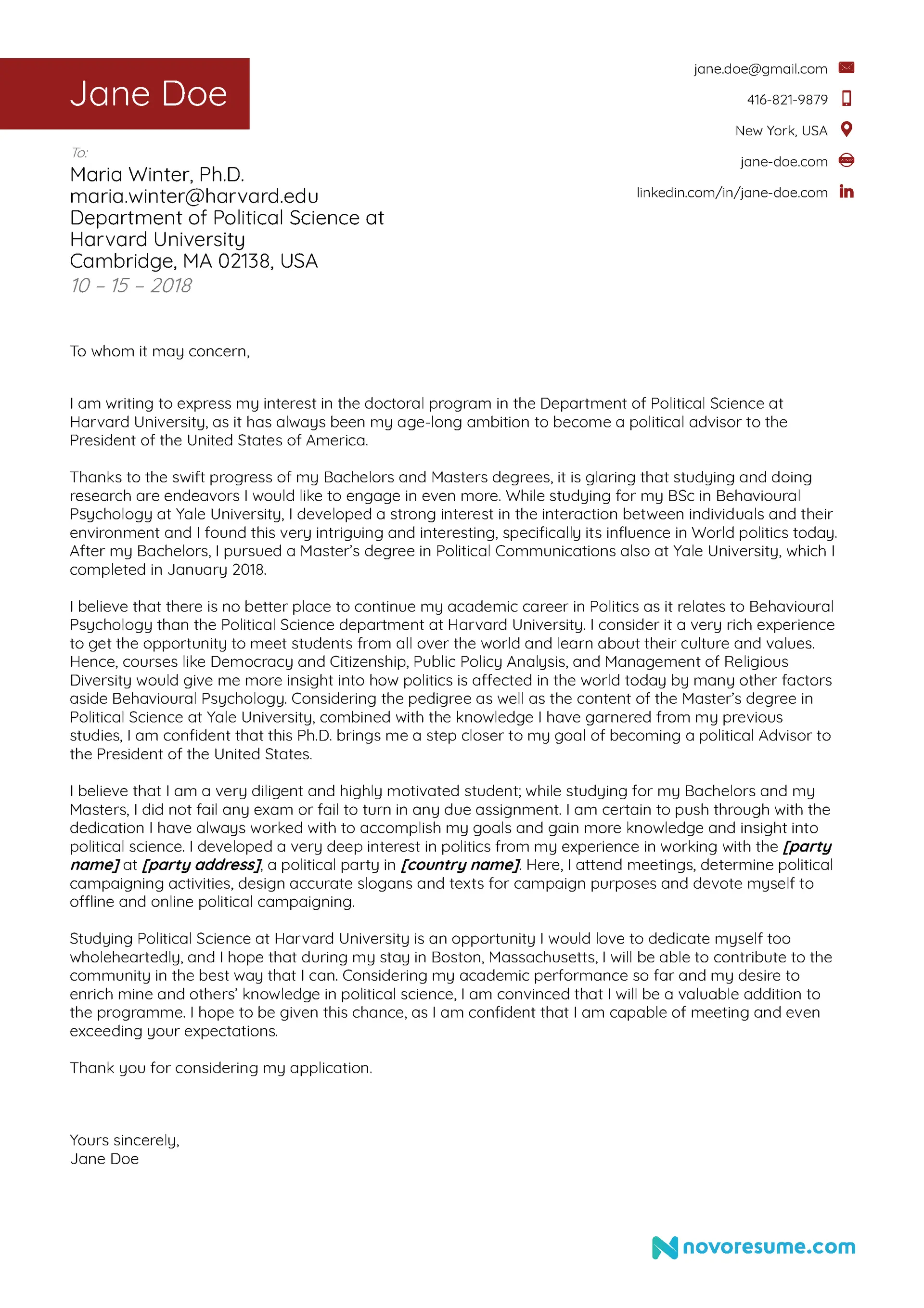
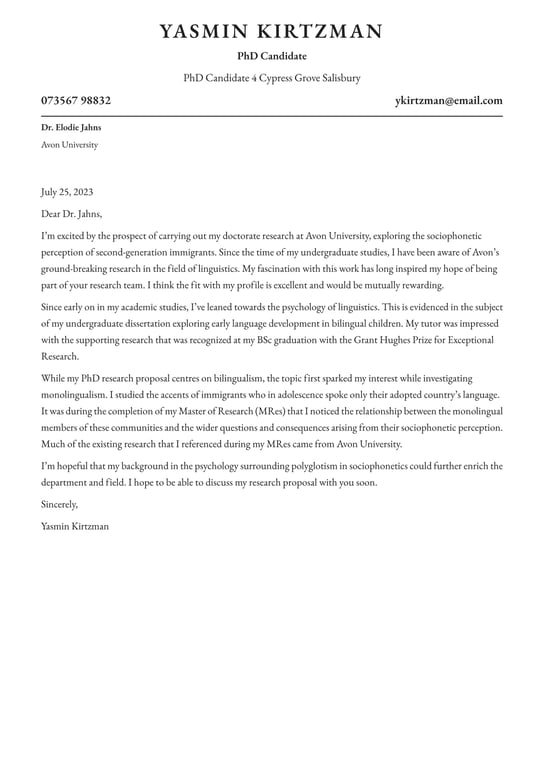
Motivation Letter for PhD – Example
Subject: Motivation Letter for PhD Application
Dear Sir/Madam,
I am writing to express my strong interest in applying for the PhD program in [Field of Study] at your esteemed institution. My motivation to pursue doctoral research stems from my deep interest in academic inquiry and my aspiration to contribute meaningful research to this field.
I have completed my [Master’s degree] in [Subject] from [University], where my academic training and dissertation work helped me develop a strong foundation in research methodology and critical analysis. During my studies, I became particularly interested in [specific research area], which I wish to explore further at the doctoral level.
I am especially drawn to your university due to its strong research focus and academic environment. The work being conducted in the [department/lab] closely aligns with my research interests, and I believe this environment will allow me to grow as an independent researcher.
My long-term goal is to pursue a career in academic research and higher education, and a PhD from your institution would be a crucial step toward achieving this objective. I am highly motivated, disciplined, and committed to long-term research work.
Thank you for considering my application. I look forward to the opportunity to contribute to and grow within your academic community.
Yours sincerely,
[Your Name]
Motivation Letter for PhD (Short Version)
I am motivated to pursue a PhD to deepen my research expertise and contribute original knowledge to my field. My academic background and research interests align strongly with this program.
Tips to Write a Strong Motivation Letter for PhD
- Be research-focused, not generic
- Show clarity of research interest
- Avoid emotional or casual language
- Keep it 1–2 pages maximum
- Customize for each university
Committees value clarity and seriousness over fancy language.
Common Mistakes to Avoid
- Writing like a job application
- Copying SOP templates word-for-word
- Being vague about research interests
- Focusing too much on personal struggles
- Ignoring university-specific alignment
A PhD letter must sound academic, focused, and intentional.
Submit Your PhD Application Professionally
Some universities and supervisors still require printed motivation letters for official records.
With PostPatra, you can write your motivation letter online and have it professionally printed and delivered anywhere in India—without visiting a post office.
👉 https://postpatra.com
Ideal for academic and official submissions.
FAQs: Motivation Letter for PhD
How long should a motivation letter for PhD be?
Usually 1–2 pages (700–1000 words unless specified).
Is a motivation letter different from an SOP?
They are similar; some universities use the terms interchangeably.
Can fresh postgraduates apply for PhD?
Yes, if they demonstrate strong research interest and readiness.
Should I mention a supervisor’s name?
Yes, if you have identified one and your interests align.
Conclusion
A well-written motivation letter for PhD clearly communicates your research intent, academic readiness, and long-term goals. When structured thoughtfully and written with clarity, it becomes one of the strongest components of your PhD application.
Write with purpose, show intellectual curiosity, and let your research motivation speak louder than words.
Leave a Reply